

We will stay firmly rooted in Chinese culture. We will collect and refine the defining symbols and best elements of Chinese culture and showcase them to the world. We will accelerate the development of China’s discourse and narrative systems, better tell China’s stories, make China’s voice heard, and present a China that is credible, appealing, and respectable.
習近平出席第二屆中國—中亞峰會並作主旨發言
發佈時間:2025-06-18 08:59:57 | 來源:新華網 | 作者: | 責任編輯:曹川川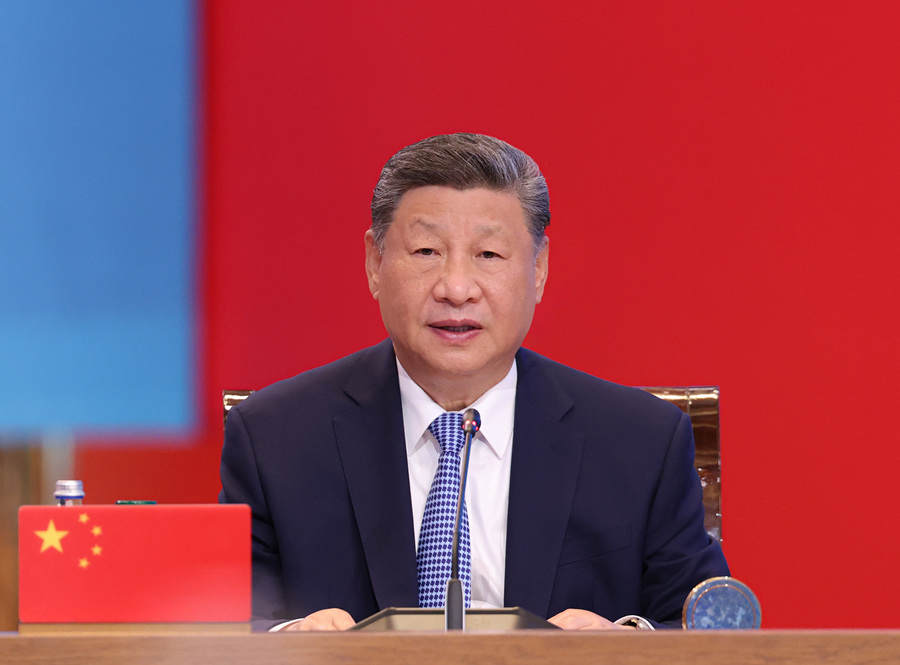
當地時間6月17日下午,第二屆中國—中亞峰會在阿斯塔納獨立宮舉行。哈薩克總統托卡耶夫主持會議。中國國家主席習近平、吉爾吉斯斯坦總統扎帕羅夫、塔吉克總統拉赫蒙、土庫曼總統別爾德穆哈梅多夫、烏茲別克總統米爾濟約耶夫出席。這是習近平發表題為《弘揚“中國—中亞精神” 推動地區合作高品質發展》的主旨發言。新華社記者 黃敬文 攝
當地時間6月17日下午,第二屆中國—中亞峰會在阿斯塔納獨立宮舉行。哈薩克總統托卡耶夫主持會議。中國國家主席習近平、吉爾吉斯斯坦總統扎帕羅夫、塔吉克總統拉赫蒙、土庫曼總統別爾德穆哈梅多夫、烏茲別克總統米爾濟約耶夫出席。元首們在友好氣氛中共同回顧西安峰會以來中國—中亞各領域合作成果,展望未來發展方向,一致決定弘揚“中國—中亞精神”,堅持永久睦鄰友好,攜手推動中國—中亞命運共同體建設不斷取得新成就。
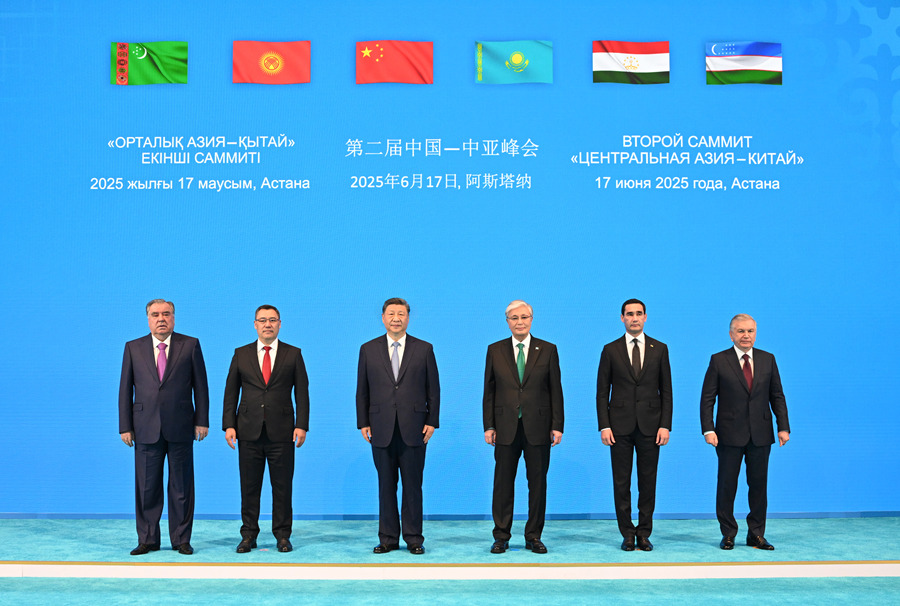
當地時間6月17日下午,第二屆中國—中亞峰會在阿斯塔納獨立宮舉行。哈薩克總統托卡耶夫主持會議。中國國家主席習近平、吉爾吉斯斯坦總統扎帕羅夫、塔吉克總統拉赫蒙、土庫曼總統別爾德穆哈梅多夫、烏茲別克總統米爾濟約耶夫出席。這是習近平同中亞五國元首集體合影。新華社記者 謝環馳 攝
習近平同中亞五國元首集體合影,隨後出席峰會,發表題為《弘揚“中國—中亞精神” 推動地區合作高品質發展》的主旨發言。

當地時間6月17日下午,第二屆中國—中亞峰會在阿斯塔納獨立宮舉行。哈薩克總統托卡耶夫主持會議。中國國家主席習近平、吉爾吉斯斯坦總統扎帕羅夫、塔吉克總統拉赫蒙、土庫曼總統別爾德穆哈梅多夫、烏茲別克總統米爾濟約耶夫出席。這是習近平步入會場。新華社記者 丁林 攝
習近平指出,兩年前,我們相聚中國西安,共同擘畫了中國中亞合作的“西安願景”。兩年來,中國同中亞國家共建“一帶一路”走深走實,各領域合作積極推進,中國—中亞機制四梁八柱基本成型,首屆峰會共識全面落地,合作之路越走越寬廣,友誼之花越開越燦爛。
習近平強調,我們的合作根植于兩千多年的友好往來,鞏固于建交30多年的團結互信,發展于新時代以來的開放共贏。在長期實踐中,我們探索形成了“互尊、互信、互利、互助,以高品質發展推進共同現代化”的“中國—中亞精神”:堅持相互尊重、平等相待,國家不分大小一視同仁,有事大家商量著辦,協商一致作決策;堅持深化互信、同聲相應,堅定支援彼此維護國家獨立、主權、領土完整和民族尊嚴,不做任何損害彼此核心利益的事;堅持互利共贏、共同發展,互為優先夥伴,互予發展機遇,兼顧各方利益,實現多贏共生;堅持守望相助、同舟共濟,支援彼此走符合國情的發展道路,辦好自己的事情,合力應對各類風險挑戰,共同維護地區安全穩定。“中國—中亞精神”為世代友好合作提供了重要遵循,我們要始終秉持,不斷發揚光大。

當地時間6月17日下午,第二屆中國—中亞峰會在阿斯塔納獨立宮舉行。哈薩克總統托卡耶夫主持會議。中國國家主席習近平、吉爾吉斯斯坦總統扎帕羅夫、塔吉克總統拉赫蒙、土庫曼總統別爾德穆哈梅多夫、烏茲別克總統米爾濟約耶夫出席。這是習近平發表題為《弘揚“中國—中亞精神” 推動地區合作高品質發展》的主旨發言。新華社記者 殷博古 攝
習近平指出,當前,百年變局加速演進,世界進入新的動蕩變革期。唯有不移公平正義之心、不墜互利共贏之志,才能維護世界和平、實現共同發展。關稅戰、貿易戰沒有贏家,單邊主義、保護主義、霸權主義註定傷人害己。歷史不能倒退,應當向前;世界不能分裂,應當團結;人類不能回到叢林法則,應當構建人類命運共同體。我們要以“中國—中亞精神”為引領,以更加進取的姿態和更加務實的舉措加強合作,推動共建“一帶一路”高品質發展,朝著構建中國—中亞命運共同體目標砥礪前行。
一要堅守彼此信賴、相互支援的團結初心。中方始終視中亞為周邊外交優先方向,堅持睦鄰安鄰富鄰、親誠惠容理念方針,同中亞國家平等相交、真誠相待,永遠親望親好、鄰望鄰好。六國簽署永久睦鄰友好合作條約,以法律形式將世代友好的原則固定下來,這是六國關係史上新的里程碑,也是中國周邊外交的創舉,功在當代、利在韆鞦。
二要優化務實高效、深度融合的合作佈局。我們確定2025至2026年為“中國中亞合作高品質發展年”,要聚焦貿易暢通、産業投資、互聯互通、綠色礦産、農業現代化、人員往來等,實施更多具體項目,培育新質生産力。中方決定在中國中亞合作框架內建立減貧、教育交流、荒漠化防治三大合作中心和貿易暢通合作平臺,支援中亞國家實施民生和發展項目,未來兩年向中亞國家提供3000個培訓名額。
三要打造和平安寧、休戚與共的安全格局。我們要加強地區安全治理,持續深化執法安全合作,攜手防範和抵禦極端思想,堅決打擊“三股勢力”,共同維護地區和平穩定。中方願為中亞國家打擊恐怖主義和跨國有組織犯罪、維護網路和生物安全提供力所能及的幫助。
四要拉緊同心同德、相知相親的人文紐帶。中方將加強同中亞國家立法機構、政黨、婦女、青年、媒體、智庫等合作,深入開展治國理政經驗交流。願在中亞開設更多文化中心、高校分校、魯班工坊,為中亞各國培養更多高素質人才。支援深化地方合作,共同打造從中央到地方、從官方到民間、從毗鄰地區到更廣區域的“心聯通”格局。
五要維護公正合理、平等有序的國際秩序。我們要攜手捍衛國際公平正義,反對霸權主義和強權政治,積極推動平等有序的世界多極化、普惠包容的經濟全球化。今年是中國人民抗日戰爭暨世界反法西斯戰爭勝利80週年和聯合國成立80週年。在艱苦卓絕的戰爭年代,中國同中亞地區人民相互支援、同甘共苦,共同為人類正義事業作出了重要貢獻。要弘揚正確歷史觀,捍衛二戰勝利成果,維護以聯合國為核心的國際體系,為世界和平和發展注入更多穩定性確定性。
習近平最後指出,中國正在以中國式現代化全面推進強國建設、民族復興偉業,無論國際形勢如何變化,中國始終堅持對外開放不動搖。中國願同中亞國家一道努力,開展更高品質合作,深化利益融合,實現共同發展,推動中國中亞合作不斷取得新的成就!

當地時間6月17日下午,第二屆中國—中亞峰會在阿斯塔納獨立宮舉行。哈薩克總統托卡耶夫主持會議。中國國家主席習近平、吉爾吉斯斯坦總統扎帕羅夫、塔吉克總統拉赫蒙、土庫曼總統別爾德穆哈梅多夫、烏茲別克總統米爾濟約耶夫出席。這是習近平同托卡耶夫握手。新華社記者 謝環馳 攝
哈薩克總統托卡耶夫等中亞五國領導人一致表示,在習近平主席卓越領導下,中國取得舉世矚目發展成就,感謝中國同中亞國家開展全面合作,為各國帶來難能可貴的發展機遇。中國—中亞機制已成為促進雙方對話合作、推動中亞各國經濟社會發展的重要平臺。在充滿不確定的世界中,中國—中亞機制的戰略意義更加突出,中國的繁榮強大正在惠及周邊國家。中國是中亞各國可以永久信賴的戰略夥伴和真正朋友。中亞各國高度珍視與中國的相互尊重、平等互利合作模式,期待同中國密切全方位合作,擴大貿易、投資規模,高品質共建“一帶一路”,促進工業、農業、科技、基礎設施、新能源、互聯互通等領域合作,強化區域安全協作,增進文化、教育、旅遊等領域人文交流,將中國—中亞機制打造為區域合作的典範,共用發展繁榮,共促和平穩定,構建更加緊密的命運共同體。各方高度讚賞中國在國際和地區事務中發揮的建設性作用,積極支援習近平主席提出的人類命運共同體理念和三大全球倡議,願同中方密切協調和配合,堅定維護自由貿易和多邊貿易體系,共同捍衛國際公平正義。
峰會期間,習近平同中亞五國元首簽署《第二屆中國—中亞峰會阿斯塔納宣言》《中華人民共和國同哈薩克共和國、吉爾吉斯共和國、塔吉克共和國、土庫曼、烏茲別克共和國永久睦鄰友好合作條約》。
峰會宣佈簽署共建“一帶一路”、人員往來便利化、綠色礦産、貿易暢通、互聯互通、工業、海關等領域12份合作文件。峰會期間,中國同中亞五國簽署多份友城協議,雙方友城數量突破100對。
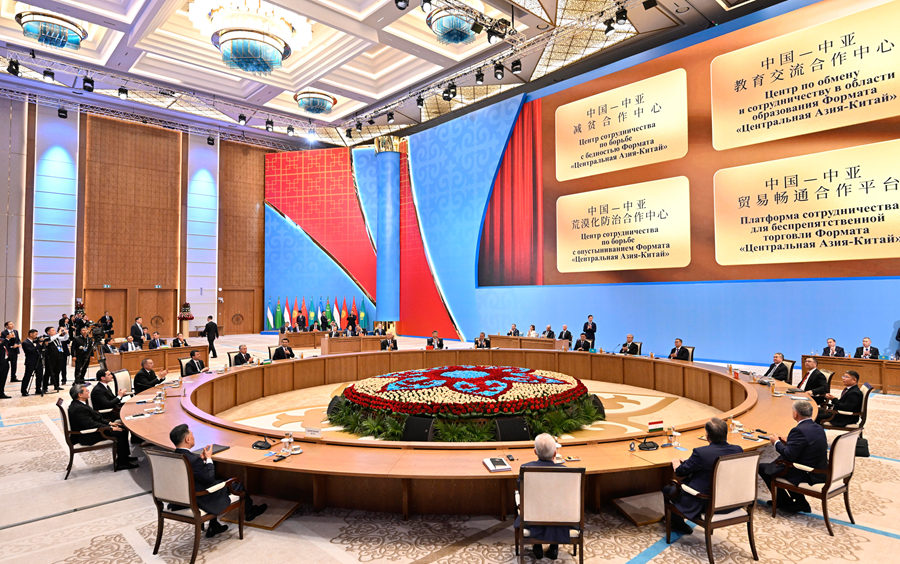
當地時間6月17日下午,第二屆中國—中亞峰會在阿斯塔納獨立宮舉行。哈薩克總統托卡耶夫主持會議。中國國家主席習近平、吉爾吉斯斯坦總統扎帕羅夫、塔吉克總統拉赫蒙、土庫曼總統別爾德穆哈梅多夫、烏茲別克總統米爾濟約耶夫出席。這是習近平同中亞五國元首共同出席中國—中亞減貧合作中心、教育交流合作中心、荒漠化防治合作中心和貿易暢通合作平臺揭牌儀式。新華社記者 殷博古 攝
習近平還同中亞五國元首共同出席中國—中亞減貧合作中心、教育交流合作中心、荒漠化防治合作中心和貿易暢通合作平臺揭牌儀式。
各方商定由中國于2027年主辦第三屆中國—中亞峰會。
當晚,習近平出席托卡耶夫總統為出席峰會的國家元首舉行的歡迎宴會。
蔡奇、王毅等參加上述活動。
Xi urges China, Central Asian countries to promote high-quality Belt and Road cooperation

Chinese President Xi Jinping delivers a keynote speech during the second China-Central Asia Summit in Astana, Kazakhstan, June 17, 2025. The second China-Central Asia Summit was held in Astana on Tuesday. Kazakh President Kassym-Jomart Tokayev chaired the summit. Xi, Kyrgyz President Sadyr Japarov, Tajik President Emomali Rahmon, Turkmen President Serdar Berdimuhamedov and Uzbek President Shavkat Mirziyoyev attended the summit. (Xinhua/Huang Jingwen)
Chinese President Xi Jinping on Tuesday called on China and Central Asian countries to promote high-quality Belt and Road cooperation and forge ahead toward the goal of building a China-Central Asia community with a shared future under the guidance of the China-Central Asia Spirit.
Xi made the remarks in his keynote speech at the second China-Central Asia Summit hosted by Kazakh President Kassym-Jomart Tokayev. Kyrgyz President Sadyr Japarov, Tajik President Emomali Rahmon, Turkmen President Serdar Berdimuhamedov and Uzbek President Shavkat Mirziyoyev also attended the summit.
Xi pointed out that during their meeting in Xi'an two years ago, they jointly outlined the Xi'an Vision for China-Central Asia cooperation. Two years on, China and Central Asian countries have further deepened and substantiated Belt and Road cooperation, he said, recalling advanced cooperation in various fields.
The core framework of the China-Central Asia mechanism is largely in place, and the consensus at the first Summit has been implemented across the board, Xi said, adding that the path of cooperation among the countries is steadily widening, and their friendship is blooming ever more brightly.
Xi stressed that the cooperation between China and Central Asian countries is rooted in more than 2,000 years of friendly exchanges, cemented by solidarity and mutual trust cultivated through more than three decades of diplomatic ties, and taken forward via openness and win-win cooperation of the new era.
Xi said building on their collective efforts over the years, the six countries have forged a China-Central Asia Spirit of "mutual respect, mutual trust, mutual benefit and mutual assistance for the joint pursuit of modernization through high-quality development."
The spirit connotes four aspects of practices. First, Xi said that China and Central Asian countries practice mutual respect and treat each other as equals, and all countries, big or small, are equal, adding that the six countries handle issues through consultation and make decisions by consensus.
Second, he said that China and Central Asian countries seek to deepen mutual trust and enhance mutual support, firmly support each other in safeguarding independence, sovereignty, territorial integrity and national dignity, and do not do anything harmful to the core interests of any party.
Third, Xi said China and Central Asian countries pursue mutual benefit and win-win cooperation and strive for common development, view each other as priority partners, and share development opportunities together, adding that they accommodate each other's interests, and work to build a win-win and symbiotic relationship.
Fourth, he said China and Central Asian countries help each other in time of need and stand together through thick and thin, supporting each other in choosing development paths suitable to respective national conditions and in taking domestic matters into their own hands, adding that the countries work together to address various risks and challenges, and uphold regional security and stability.
This China-Central Asia Spirit is an important guideline for their endeavor to carry forward friendship and cooperation from generation to generation, and the six countries should always uphold it and let it shine forever, Xi noted.
Today, unprecedented changes are unfolding at a faster pace across the globe, thrusting the world into a new state of heightened turbulence and volatility, Xi pointed out, noting that a strong belief in fairness and justice, and an unyielding commitment to mutual benefit and win-win cooperation are the only way to maintain world peace and achieve common development.
There is no winner in tariff wars or trade wars, and unilateralism, protectionism and hegemonism will surely backfire while hurting others, he noted.
Maintaining that history should move forward, not backward, and the world should be united, not divided, Xi said humanity must not regress to the law of the jungle, but should instead build a community with a shared future for mankind.
Xi called on the six countries to act on the China-Central Asia Spirit, and enhance cooperation with renewed vigor and more practical measures.
To achieve this, he made five points.
First, China and Central Asian countries should stay committed to the fundamental goal of unity, and always trust and support each other, he said.
China consistently takes Central Asia as a priority in its neighborhood diplomacy, Xi noted, adding that with a firm belief in an amicable, secure and prosperous neighborhood as well as a strong dedication to amity, sincerity, mutual benefit and inclusiveness, China interacts with Central Asian countries on the basis of equality and sincerity, and the six countries always wish their neighbors well.
The six countries will sign together a treaty on eternal good-neighborliness, friendship and cooperation to enshrine the principle of everlasting friendship in the form of law, he said, deeming it as a new landmark in the history of the relations of the six countries and a pioneering initiative in China's diplomatic engagement with its neighbors, which constitutes a milestone for today and a foundation for tomorrow.
Second, China and Central Asian countries should optimize the cooperation framework to make it more results-oriented, more efficient and more deeply integrated, Xi said.
Recalling that the six countries have agreed to designate 2025 and 2026 as the Years of High-Quality Development of China-Central Asia Cooperation, he said that all sides should focus the cooperation on smooth trade, industrial investment, connectivity, green mining, agricultural modernization and personnel exchanges, roll out more projects on the ground and foster new quality productive forces.
He said China has decided to establish three cooperation centers, i.e. on poverty reduction, on education exchange, and on desertification prevention and control, as well as a cooperation platform on smooth trade under the China-Central Asia cooperation framework.
China supports Central Asian countries in developing livelihood and development projects, Xi said, adding that China will provide 3,000 training opportunities to Central Asian countries in the next two years.
Third, China and Central Asian countries should develop a security framework for peace, tranquility and solidarity, step up regional security governance, deepen law enforcement and security cooperation, jointly prevent and thwart extreme ideologies, and resolutely fight terrorism, separatism and extremism, so as to maintain peace and stability in the region, Xi said.
China will do its best to help Central Asian countries combat terrorism and transnational organized crime and safeguard cybersecurity and biosecurity, he said.
Fourth, China and Central Asian countries should cement the bonds of shared vision, mutual understanding and mutual affection between peoples, he noted, saying that China will enhance cooperation between legislatures, political parties, women, youth, media and think tanks with Central Asian countries, conduct in-depth exchange of governance experience, and is ready to set up more cultural centers, university branches and Luban Workshops in Central Asia to train more high-caliber talent for Central Asian countries.
China supports deepening subnational cooperation with Central Asia, Xi said, adding that China and Central Asian countries should nurture heart-to-heart connections at central and subnational levels, between official and non-governmental actors, and from adjacent to broader areas.
Fifth, China and Central Asian countries should uphold a fair and equitable international order and an equal and orderly world structure, stand ready to work with all parties to defend international fairness and justice, oppose hegemonism and power politics, and promote an equal and orderly multipolar world and a universally beneficial and inclusive economic globalization, Xi said.
This year marks the 80th anniversary of the victory of the Chinese People's War of Resistance Against Japanese Aggression and the World Anti-Fascist War, and the 80th anniversary of the founding of the United Nations, he said, recalling that in the strenuous times of war, Chinese and Central Asian peoples supported each other through adversity, and jointly made important contributions to the cause of justice of humanity.
He also noted the need to promote the correct view of history, defend the fruits of the victory of World War II, uphold the UN-centered international system, and provide more stability and certainty for world peace and development.
Xi pointed out that China is building a great modern socialist country in all respects and advancing the great rejuvenation of the Chinese nation on all fronts through Chinese modernization.
No matter how the international situation changes, China will remain unwavering in opening up to the outside world, he said, noting that China is ready to embrace higher-quality cooperation and deepen the integration of interests with Central Asian countries, so as to achieve common development and strive for new progress in China-Central Asia cooperation.
Tokayev and the other four Central Asian leaders unanimously stated that the China-Central Asia mechanism has become an important platform for promoting dialogue and cooperation, as well as for advancing the economic and social development of Central Asian countries.
In a world full of uncertainties, the strategic significance of the mechanism has become increasingly prominent, and China's growing prosperity and strength are benefiting its neighboring countries, they said, noting that China is a strategic partner and a true friend that Central Asian countries can always count on.
The Central Asian countries highly value the model of cooperation with China based on mutual respect, equality and mutual benefit, and look forward to deepening all-round cooperation with China and expanding trade and investment, the five leaders added.
They also expressed the hope to jointly pursue high-quality Belt and Road cooperation, promote cooperation in such fields as industry, agriculture, science and technology, infrastructure, new energy and connectivity, strengthen regional security collaboration, and enhance people-to-people and cultural exchanges in fields like culture, education and tourism.
The leaders of the five Central Asian countries expressed their intention to build the China-Central Asia mechanism into a model of regional cooperation, share development and prosperity, jointly promote peace and stability, and build a closer community with a shared future.
The five parties highly appreciate China's constructive role in international and regional affairs, and actively support the concept of building a community with a shared future for mankind, as well as the three major global initiatives proposed by President Xi.
They also expressed the willingness to closely coordinate and cooperate with China to firmly safeguard free trade and the multilateral trading system, and jointly defend international equity and justice.
During the summit, Xi and the heads of state of the Central Asian nations signed the Astana Declaration of the second China-Central Asia Summit, and a treaty on eternal good-neighborliness, friendship and cooperation.
The meeting also announced the signing of 12 cooperation agreements regarding the Belt and Road cooperation, facilitation of personnel exchanges, green mining, trade, connectivity, industry and customs.
At the summit, China signed multiple sister city agreements with the five Central Asian countries, thus the pairs of sister cities between the two sides have exceeded 100.
Xi and other leaders also witnessed the inauguration of three China-Central Asia cooperation centers and a trade platform, namely the China-Central Asia poverty reduction cooperation center, the China-Central Asia education exchange cooperation center, the China-Central Asia desertification prevention and control cooperation center, as well as the China-Central Asia smooth trade cooperation platform.
All parties also agreed that China will host the third China-Central Asia Summit in 2027.

Chinese President Xi Jinping, Kazakh President Kassym-Jomart Tokayev, Kyrgyz President Sadyr Japarov, Tajik President Emomali Rahmon, Turkmen President Serdar Berdimuhamedov and Uzbek President Shavkat Mirziyoyev pose for a group photo in Astana, Kazakhstan, June 17, 2025. The second China-Central Asia Summit was held in Astana on Tuesday. Tokayev chaired the summit. Xi, Japarov, Rahmon, Berdimuhamedov and Mirziyoyev attended the summit. (Xinhua/Xie Huanchi)

Chinese President Xi Jinping walks into the venue of the second China-Central Asia Summit in Astana, Kazakhstan, June 17, 2025. The second China-Central Asia Summit was held in Astana on Tuesday. Kazakh President Kassym-Jomart Tokayev chaired the summit. Xi, Kyrgyz President Sadyr Japarov, Tajik President Emomali Rahmon, Turkmen President Serdar Berdimuhamedov and Uzbek President Shavkat Mirziyoyev attended the summit. (Xinhua/Ding Lin)

Chinese President Xi Jinping shakes hands with Kazakh President Kassym-Jomart Tokayev in Astana, Kazakhstan, June 17, 2025. The second China-Central Asia Summit was held in Astana on Tuesday. Tokayev chaired the summit. Xi, Kyrgyz President Sadyr Japarov, Tajik President Emomali Rahmon, Turkmen President Serdar Berdimuhamedov and Uzbek President Shavkat Mirziyoyev attended the summit. (Xinhua/Xie Huanchi)

Chinese President Xi Jinping delivers a keynote speech during the second China-Central Asia Summit in Astana, Kazakhstan, June 17, 2025. The second China-Central Asia Summit was held in Astana on Tuesday. Kazakh President Kassym-Jomart Tokayev chaired the summit. Xi, Kyrgyz President Sadyr Japarov, Tajik President Emomali Rahmon, Turkmen President Serdar Berdimuhamedov and Uzbek President Shavkat Mirziyoyev attended the summit. (Xinhua/Yin Bogu)

Chinese President Xi Jinping, Kazakh President Kassym-Jomart Tokayev, Kyrgyz President Sadyr Japarov, Tajik President Emomali Rahmon, Turkmen President Serdar Berdimuhamedov and Uzbek President Shavkat Mirziyoyev witness inauguration of the China-Central Asia poverty reduction cooperation center, the China-Central Asia education exchange cooperation center, the China-Central Asia desertification control cooperation center and the China-Central Asia trade facilitation cooperation platform in Astana, Kazakhstan, June 17, 2025. The second China-Central Asia Summit was held in Astana on Tuesday. Tokayev chaired the summit. Xi, Japarov, Rahmon, Berdimuhamedov and Mirziyoyev attended the summit. (Xinhua/Yin Bogu)