當前位置: “講好中國故事”創意傳播國際大賽>
《羌繡之光:四位國際留學生與北川羌繡的奇妙邂逅》——2024“講好中國故事”創意傳播國際大賽全國大學生專項賽獲獎作品展播
發佈時間: 2025-07-21 | 來源: 中國網 | 作者: 熊曉菊、沈垸曲、于金伯、劉籽岑、Ezeuka Makuochukwu Nelson 張瀚文、JESSICA SUSANTO 莊思嘉
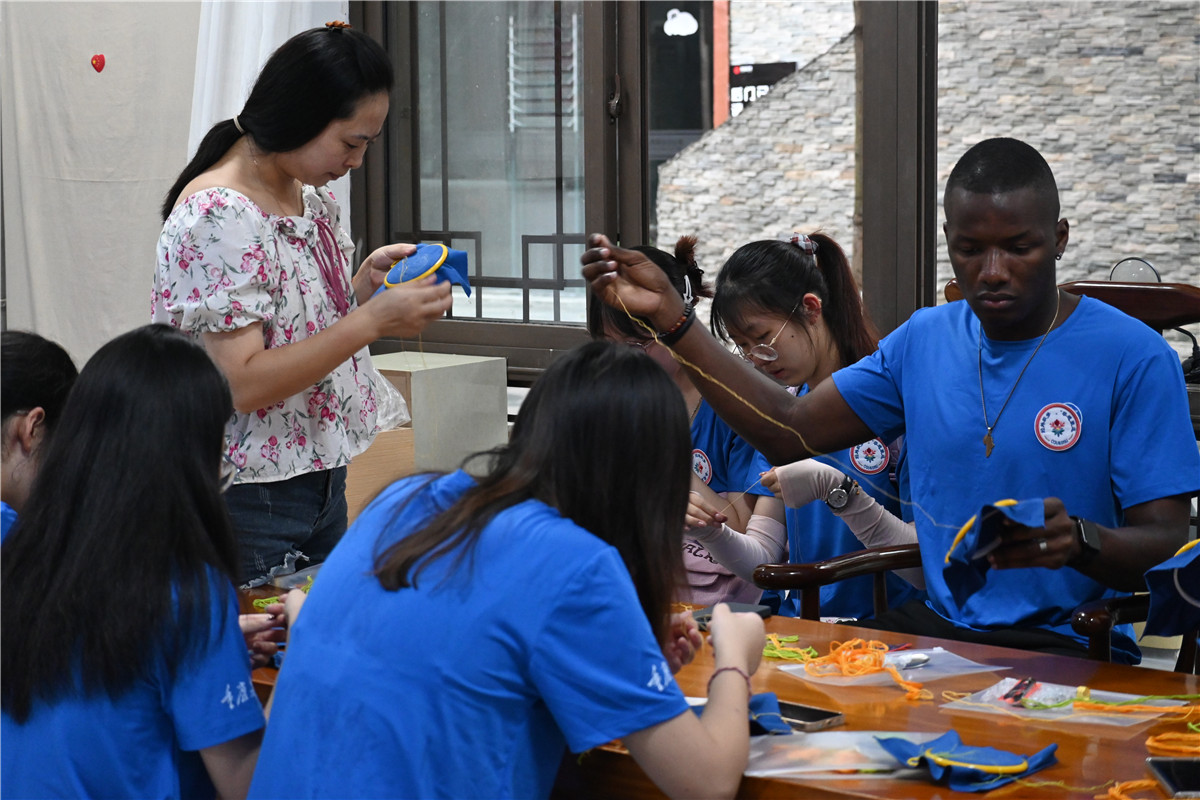
尼日利亞留學生張瀚文在羌繡傳承人的悉心指導下,與中國學生一同學習穿針引線,親身感受羌繡藝術的獨特魅力。
Zhang Hanwen, a Nigerian student, learned under the meticulous guidance of a Qiang embroidery inheritor alongside Chinese students, personally experiencing the unique charm of Qiang embroidery art by practicing threading and stitching.
在北川,這片古老而神秘的土地上,羌繡猶如一顆熠熠生輝的明珠,以其獨特的藝術光芒,吸引著來自世界各地的目光。作為中國非物質文化遺産的瑰寶,羌繡以其精美的圖案設計、獨特的針法技巧以及深厚的文化內涵,成為了連接不同文化和心靈的橋梁。而今天,我們要講述的,正是四位來自異國他鄉的留學生——越南的杜氏青梅、巴基斯坦的趙宇、尼日利亞的張瀚文以及印度尼西亞的莊思嘉,在北川與羌繡之間發生的奇妙邂逅。
In Beichuan, this ancient and mysterious land, Qiang embroidery shines like a radiant pearl, attracting the gaze of people from all over the world with its unique artistic brilliance. As a treasure of China’s intangible cultural heritage, Qiang embroidery, with its exquisite pattern designs, unique stitching techniques, and profound cultural connotations, has become a bridge connecting different cultures and hearts. Today, we are going to tell the story of a fantastic encounter between Qiang embroidery and four international students from different countries—Du Thi Thanh Mai from Vietnam, Zhao Yu from Pakistan, Zhang Hanwen from Nigeria, and Zhuang Sijia from Indonesia, in Beichuan.
2024年的暑假,四位懷揣著對羌繡無限憧憬的留學生,因一次文化交流活動的契機,匯聚在了這個充滿羌族風情的城市。他們來自不同的文化背景,擁有各異的膚色和語言,但都對羌繡這門古老的藝術抱有濃厚的興趣。在北川,他們有幸結識了羌繡的傳承人,並在她的耐心指導下,正式踏上了羌繡的學習之旅。
During the summer vacation of 2024, these four students, filled with infinite longing for Qiang embroidery, converged in this city full of Qiang ethnic customs due to a cultural exchange activity. Coming from different cultural backgrounds, with different skin colors and languages, they all shared a deep interest in this ancient art of Qiang embroidery. In Beichuan, they had the privilege of meeting the inheritor of Qiang embroidery and, under her patient guidance, officially embarked on their learning journey of Qiang embroidery.
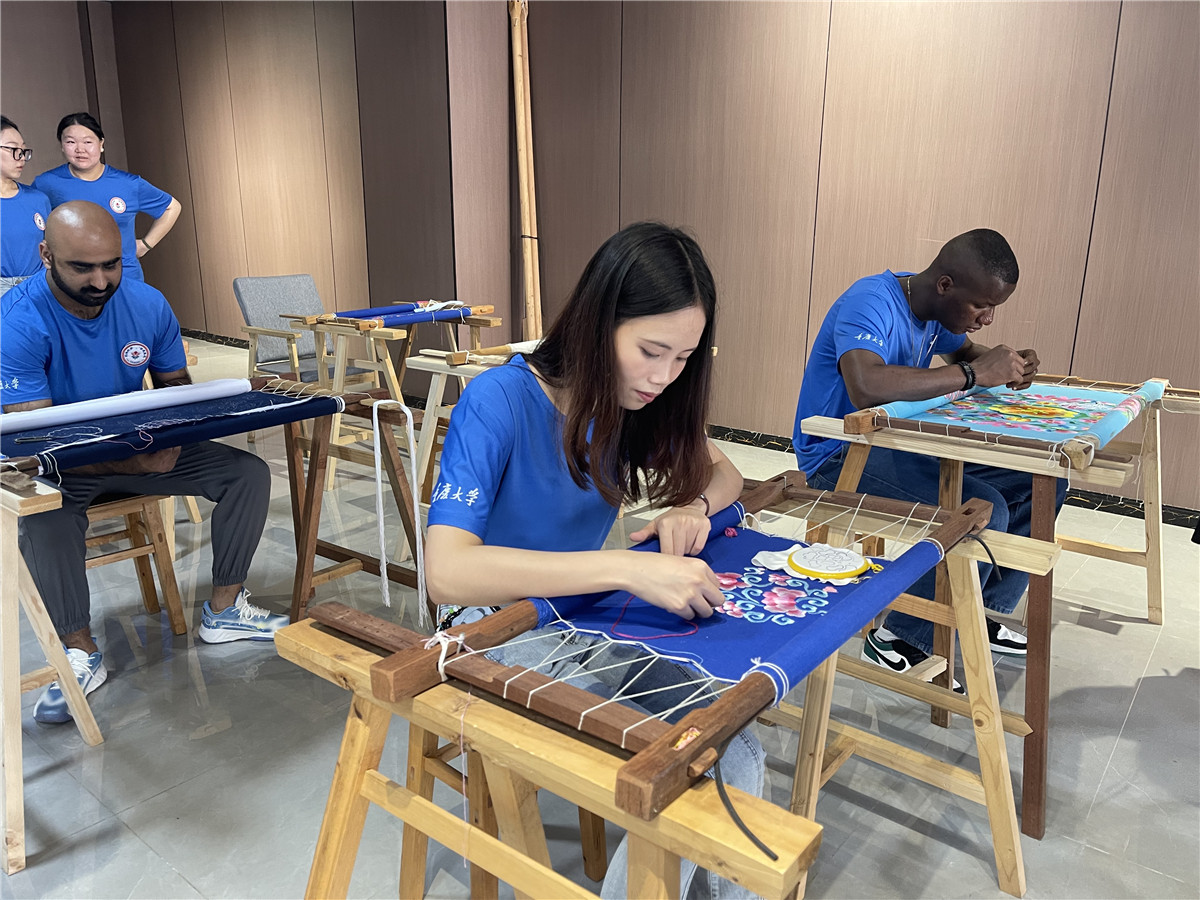
越南留學生杜氏青梅、巴基斯坦留學生趙宇和尼日利亞留學生張瀚文在繡布上繡制具有北川特色地羊角花圖案。
Vietnamese student Do Thi Than Mai, Pakistani student Zhao Yu, and Nigerian student Zhang Hanwen embroidered a pattern of sheep’s horn flowers, which is characteristic of Beichuan, onto the fabric.
杜氏青梅,這位來自越南的留學生,憑藉其細膩的心靈和靈巧的雙手,迅速融入了羌繡的世界。在繡娘的悉心教導下,她學會了如何巧妙地將彩色的絲線穿梭在繡布之間,繪製出一幅幅栩栩如生的圖案。她的作品不僅展現了羌繡的精美與細膩,更融入了越南文化的獨特韻味。
Du Thi Thanh Mai, the Vietnamese student, quickly immersed herself in the world of Qiang embroidery with her delicate heart and nimble hands. Under the meticulous teaching of the embroiderer, she learned how to skillfully weave colorful threads between the fabric to create lifelike patterns. Her works not only demonstrated the exquisiteness and delicacy of Qiang embroidery but also incorporated the unique charm of Vietnamese culture.
趙宇,這位來自巴基斯坦的留學生,雖然對羌繡的針法並不熟悉,但他憑藉對藝術的熱愛和不懈的努力,逐漸掌握了羌繡的精髓。每當他完成一幅作品時,都會露出滿意的笑容,仿佛在與羌繡進行著一場無聲而深刻的對話。他的作品充滿了對羌繡藝術的尊重與敬畏,同時也展現了他對羌族文化的獨特理解。
Zhao Yu, the Pakistani student, although unfamiliar with the stitching techniques of Qiang embroidery, gradually mastered its essence through his love for art and relentless efforts. Whenever he completed a work, he would reveal a satisfied smile, as if engaging in a silent and profound dialogue with Qiang embroidery. His works are filled with respect and awe for the art of Qiang embroidery, while also showcasing his unique understanding of Qiang culture.
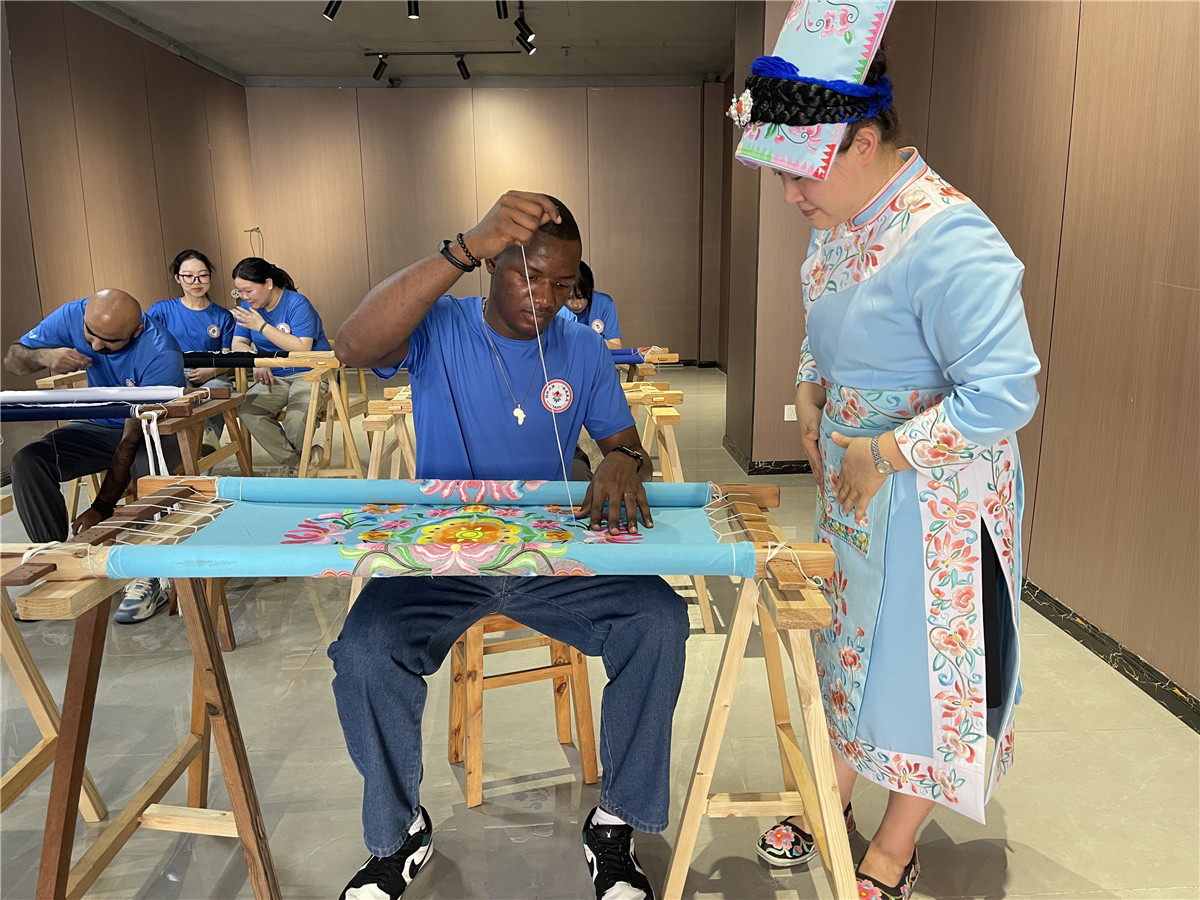
尼日利亞留學生張瀚文正在向羌繡傳承人展示自己對羌繡針法的學習成果。
Nigerian student Zhang Hanwen is showcasing his learning achievements of Qiang embroidery stitching techniques to the inheritor of Qiang embroidery.
張瀚文,這位來自尼日利亞的留學生,對羌繡的色彩和圖案讚嘆不已。他認為,羌繡不僅是一種技藝的展現,更是一種文化的傳承與表達。通過羌繡,他更加深入地了解了羌族的歷史和文化,也更加珍視這份來自東方的藝術瑰寶。他的作品充滿了對羌繡藝術的熱愛與敬仰,同時也融入了尼日利亞文化的獨特色彩。
Zhang Hanwen, the Nigerian student, marveled at the colors and patterns of Qiang embroidery. He believes that Qiang embroidery is not only a display of craftsmanship but also a transmission and expression of culture. Through Qiang embroidery, he gained a deeper understanding of the history and culture of the Qiang people and cherished this artistic treasure from the East even more. His works are filled with love and reverence for the art of Qiang embroidery, while also incorporating the unique colors of Nigerian culture.
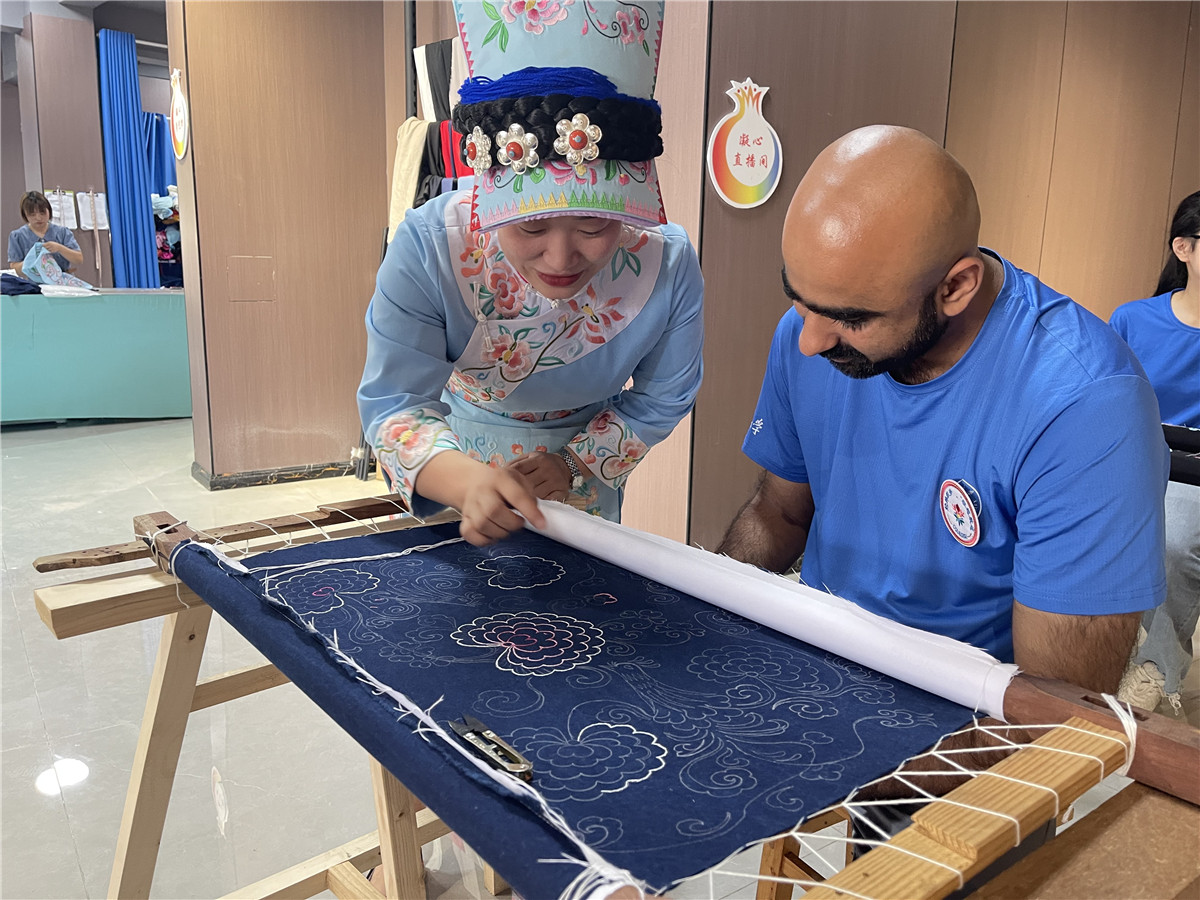
羌繡傳承人熱情地向巴基斯坦留學生趙宇講解繡布上羊角花圖案的象徵含義。
The inheritor of Qiang embroidery enthusiastically explained the symbolic meaning of the sheep’s horn flower pattern on the embroidered fabric to Pakistani student Zhao Yu.
莊思嘉,這位來自印度尼西亞的留學生,對羌繡的針法和技巧充滿了好奇與敬畏。她虛心向繡娘請教,不斷嘗試新的針法和圖案,最終創作出了獨具風格的羌繡作品。她的作品不僅展現了羌繡的精湛技藝,更融入了印度尼西亞文化的獨特元素。
Zhuang Sijia, the Indonesian student, was full of curiosity and awe for the stitching techniques and skills of Qiang embroidery. She humbly sought advice from the embroiderer, constantly trying new stitching techniques and patterns, and ultimately created Qiang embroidery works with a unique style. Her works not only demonstrate the superb craftsmanship of Qiang embroidery but also incorporate the unique elements of Indonesian culture.
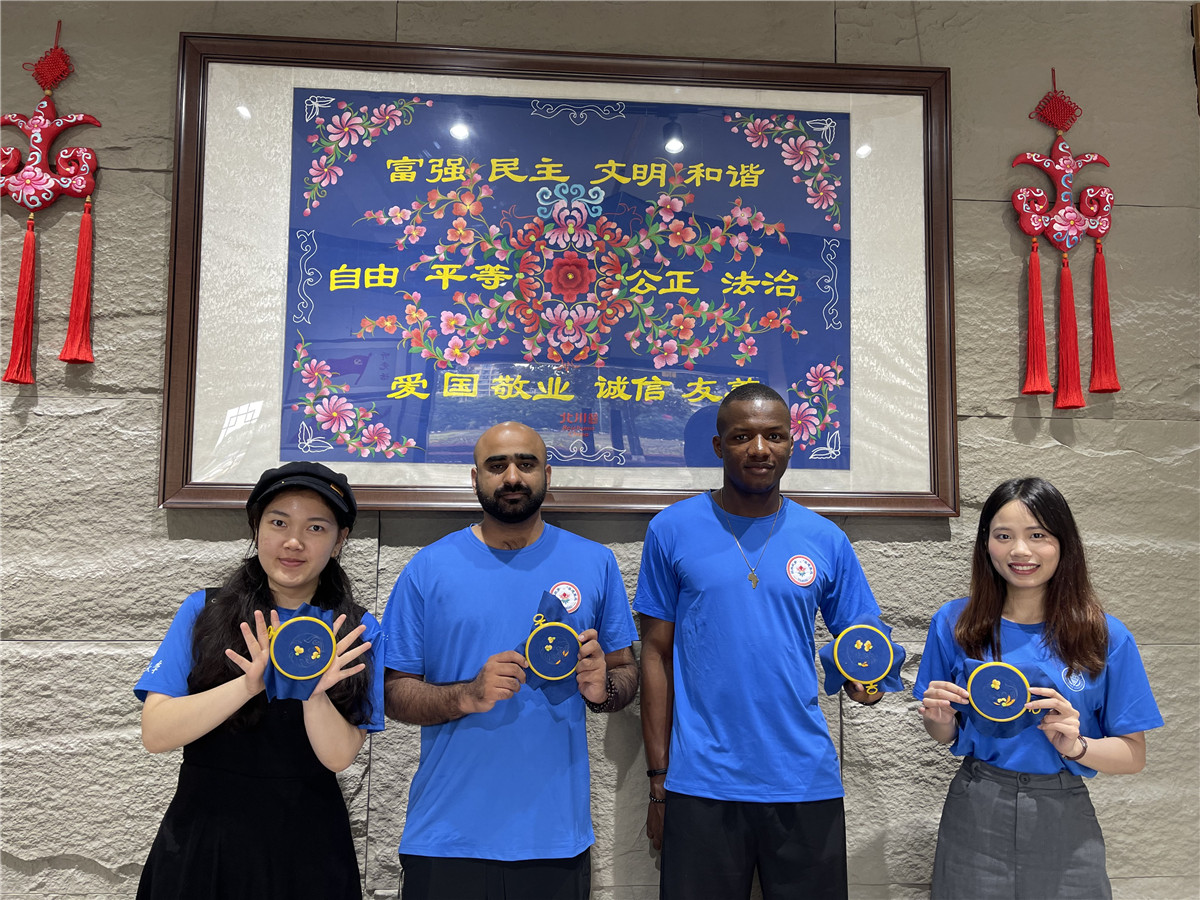
四名留學生站在由黨的二十大代表陳雲珍精心繡制的《社會主義核心價值觀》作品前,自豪地展示他們學習羌繡的成果。
The four international students stood in front of the artwork”Core Socialist Values” meticulously embroidered by Chen Yunzhen, a delegate to the 20th National Congress of the Communist Party of China, proudly displaying their achievements in learning Qiang embroidery.
在北川的日子裏,四位留學生不僅學習了羌繡的技藝,更深刻體會到了羌繡背後所蘊含的文化內涵。他們了解到,羌繡不僅是羌族人民日常生活中的一部分,更是他們表達情感、記錄歷史、傳承文化的重要方式。每一幅羌繡作品,都蘊含著羌族人民的智慧和情感,是他們與自然和諧共生的見證。
During their time in Beichuan, the four students not only learned the skills of Qiang embroidery but also deeply appreciated the cultural connotations behind it. They learned that Qiang embroidery is not only a part of the daily lives of the Qiang people but also an important way for them to express emotions, record history, and transmit culture. Each Qiang embroidery work contains the wisdom and emotions of the Qiang people and serves as a testament to their harmonious coexistence with nature.
通過這段時間的學習和實踐,四位留學生不僅掌握了羌繡的技藝,更與羌繡的傳承人建立了深厚的友誼。他們相互學習、相互借鑒,共同探索著羌繡藝術的無限可能。在羌繡的世界裏,他們找到了共同的語言和追求,也收穫了成長與自信。
Through this period of learning and practice, the four students not only mastered the skills of Qiang embroidery but also established deep friendships with the inheritor of Qiang embroidery. They learned from each other, borrowed ideas from each other, and jointly explored the infinite possibilities of Qiang embroidery art. In the world of Qiang embroidery, they found a common language and pursuit and also gained growth and confidence.
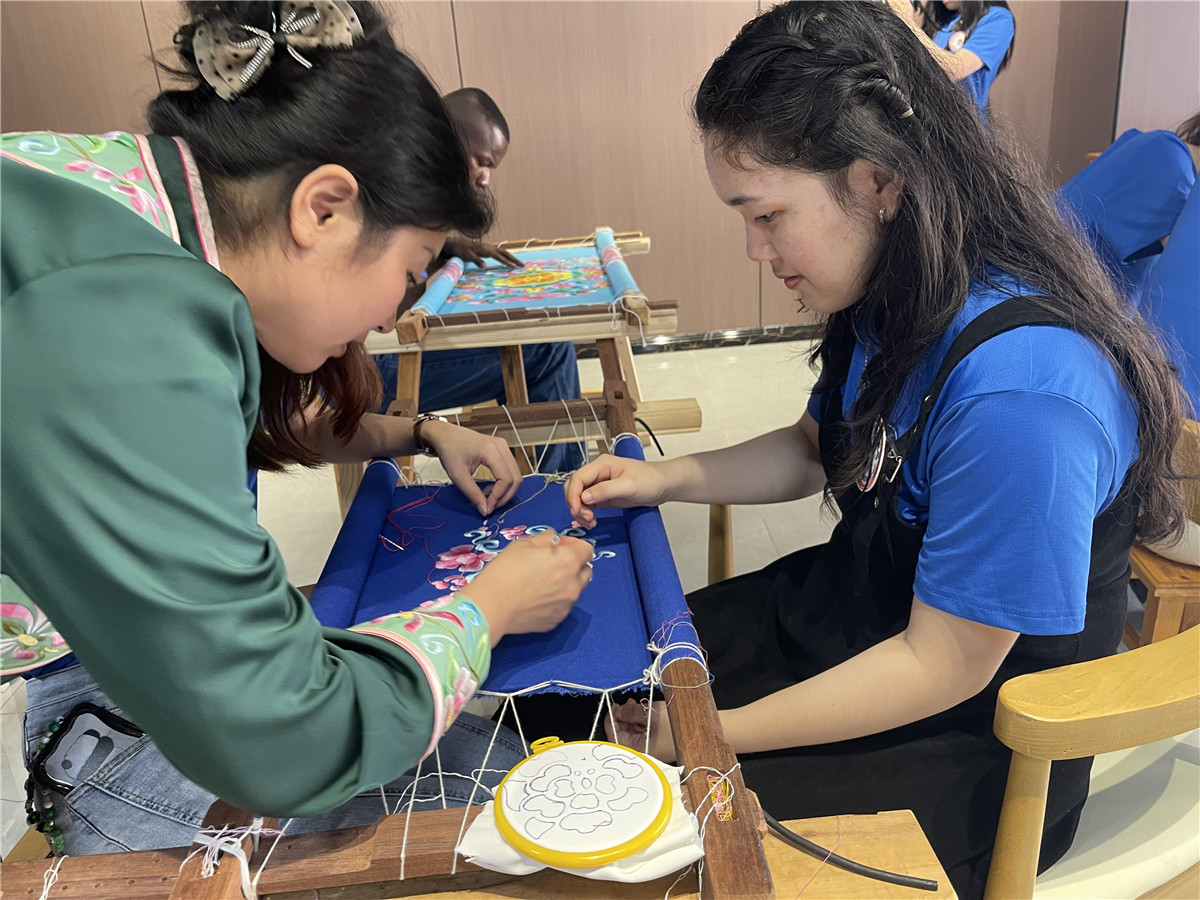
印度尼西亞留學生莊思嘉虛心向繡娘請教羌繡針法。
Indonesian student Zhuang Sijia humbly sought advice from the embroiderer on Qiang embroidery stitching techniques.
如今,四位留學生已經離開了北川,但他們與羌繡的緣分並未就此結束。他們將繼續傳播羌繡的藝術魅力,讓更多的人了解和欣賞這門古老的藝術。同時,他們也期待著未來能夠再次回到北川,與羌繡的傳承人再次相聚,共同續寫這段跨越國界的藝術傳奇。
Now, the four students have left Beichuan, but their connection with Qiang embroidery has not ended. They will continue to spread the artistic charm of Qiang embroidery, letting more people know and appreciate this ancient art. At the same time, they also look forward to returning to Beichuan in the future, reuniting with the inheritor of Qiang embroidery, and jointly continuing this cross-border artistic legend.
羌繡之光,不僅照亮了四位留學生的心靈,更讓他們成為了羌繡文化的傳播者和守護者。在北川這片充滿魅力的土地上,羌繡與四位留學生的故事,將永遠被銘記在心,成為一段跨越時空的文化佳話。
The light of Qiang embroidery not only illuminated the hearts of the four students but also made them become Propagator and Guardian of Qiang embroidery culture. In this charming land of Beichuan, the story of Qiang embroidery and the four students will forever be remembered as a cultural tale that transcends time and space.
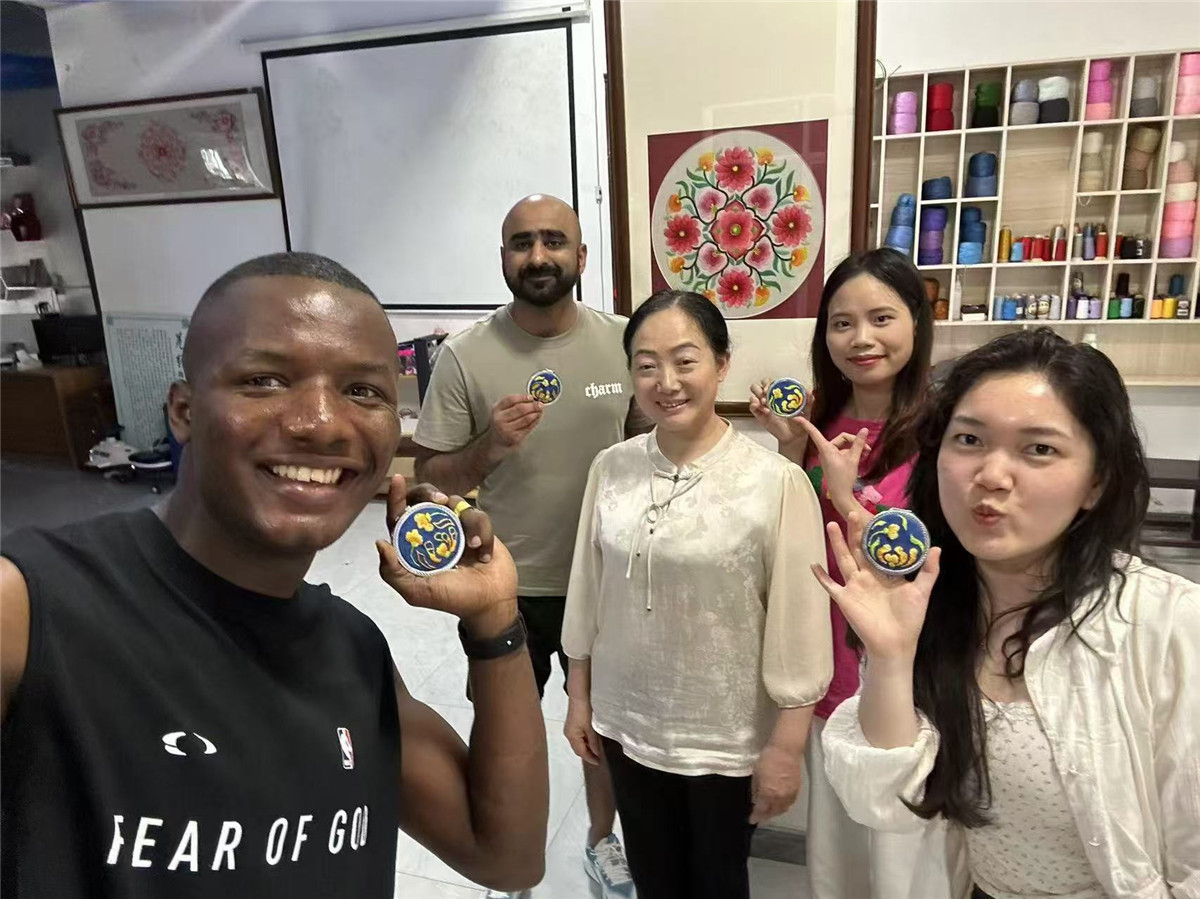
四名留學生帶著自己親手繡制的羌繡製品與黨的二十大代表陳雲珍合影。
The four international students posed for a photo with Chen Yunzhen, a delegate to the 20th National Congress of the Communist Party of China, while holding the Qiang embroidery products they had personally embroidered.
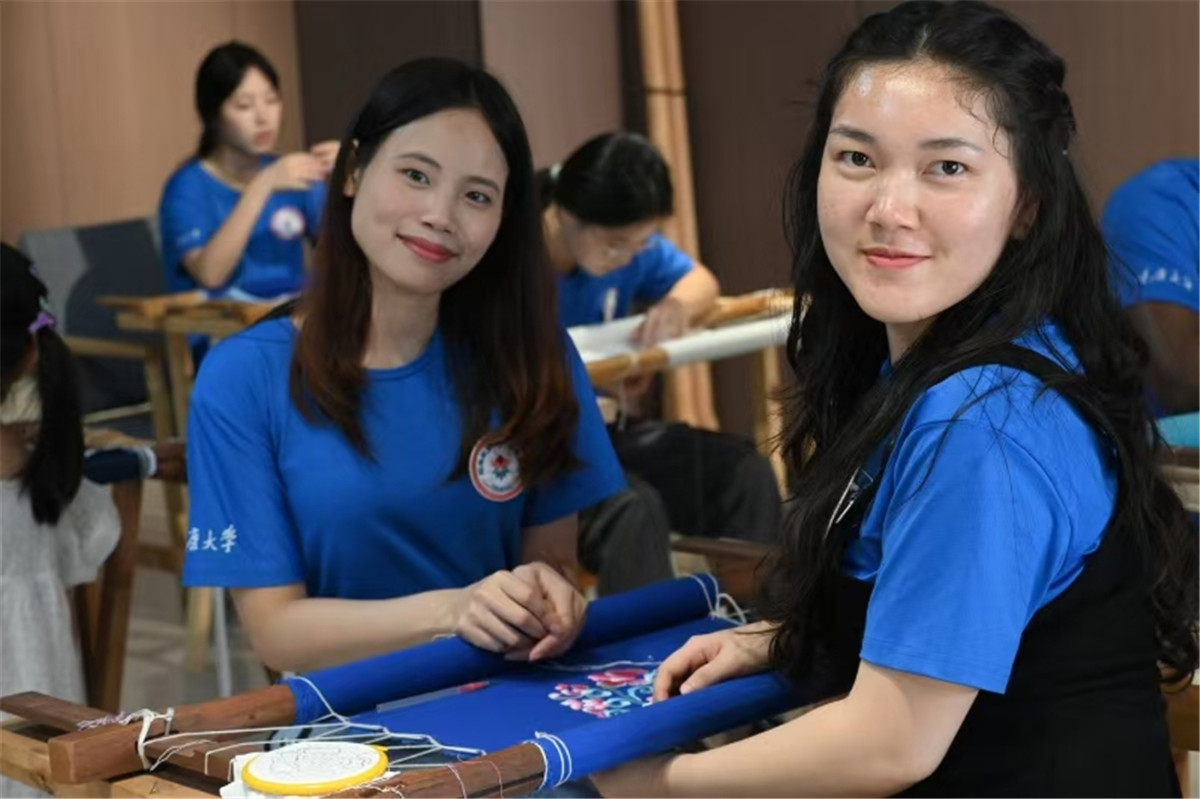
印度尼西亞留學生莊思嘉與越南留學生杜氏青梅合力繡制一副羊角花圖案。
Indonesian student Zhuang Sijia and Vietnamese student Do Thi Thanh Mai worked together to embroider a pattern of sheep’s horn flowers.
學校名稱:重慶大學
主創團隊:熊曉菊、沈垸曲、于金伯、劉籽岑、Ezeuka Makuochukwu Nelson 張瀚文、JESSICA SUSANTO 莊思嘉
指導教師:魏世平、王佳